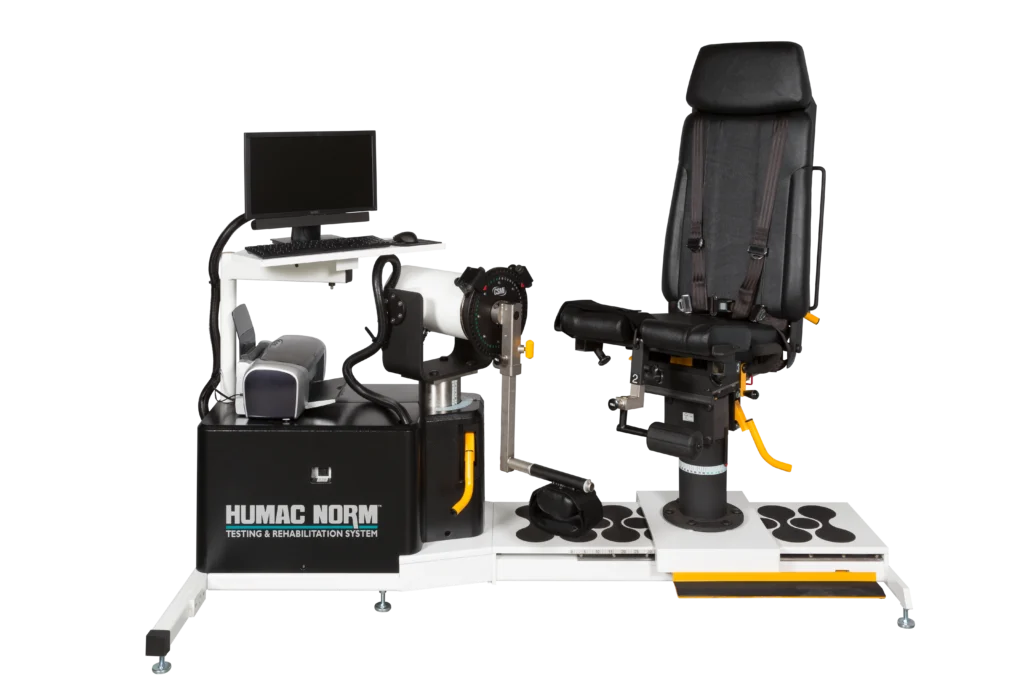
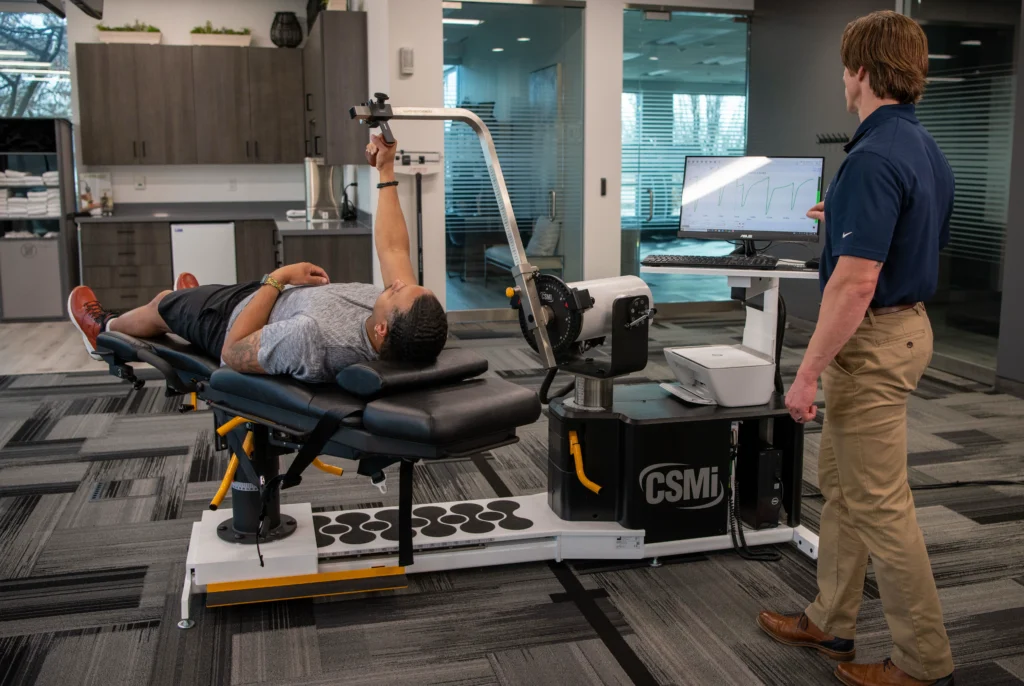
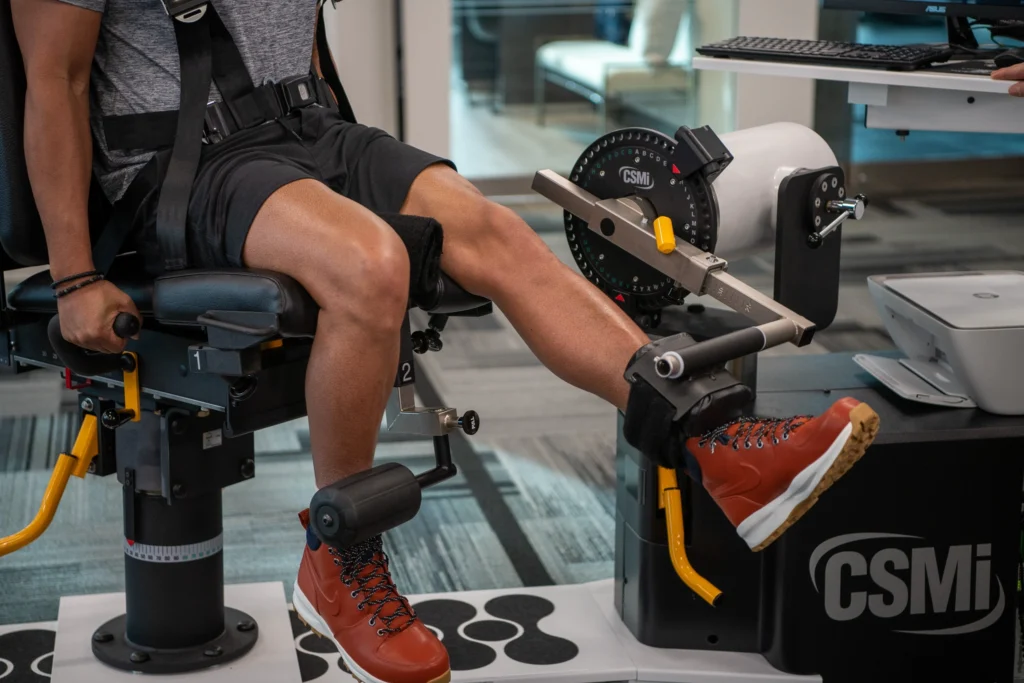
The HUMAC NORM Isokinetic Dynamometer System is a versatile, research-grade testing and rehabilitation machine designed for clinicians, sports scientists, and performance professionals. It combines advanced mechanical design with intuitive software to provide a complete solution for measuring strength, range of motion, power and functional performance across multiple joints and movements.
HUMAC NORM is widely used in clinical practice, athletic training rooms, research laboratories and rehabilitation settings to support evidence-based assessment, tailored programming and data-driven decision-making.
Comprehensive Joint Coverage: Includes attachments and patterns for 22 isolated joint movement patterns covering the shoulder, elbow, wrist, hip, knee, ankle and back. Optional add-ons expand capabilities further.
Four Resistance Modes: Easily switch between Isokinetic, Isotonic, Isometric and Passive modes to assess or train strength, power, control and mobility.
Zero Gravity Mode: Software-driven gravity correction that removes limb weight to isolate muscle performance and enhance accuracy. 
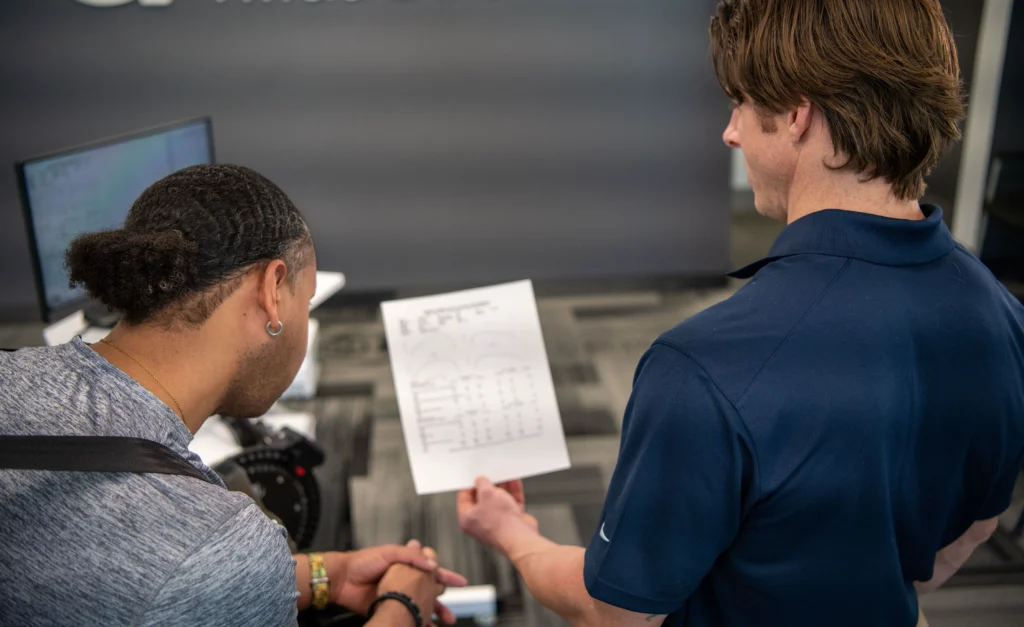
Advanced Reporting: Intuitive software generates detailed, easy-to-interpret reports with curves, summaries, progress tracking and normative comparisons.
Intuitive Software Workflow: Designed to take users quickly from patient setup to final report, reducing time and enhancing consistency.
Research-Ready: Trusted in clinical research and performance labs around the world for objective data collection and robust analysis.
Why HUMAC NORM
As a comprehensive isokinetic testing solution, HUMAC NORM supports evidence-based practice by providing reliable, objective data that helps clinicians understand deficits, monitor progress and deliver more effective interventions. Its combination of mechanical versatility and sophisticated reporting makes it a trusted choice for those seeking to elevate clinical outcomes and athlete performance.
What It Does
HUMAC NORM allows practitioners to:
Assess muscle strength and performance: Quantify concentric and eccentric force, torque and work output throughout the range of motion.
Track rehabilitation progress: Generate longitudinal data that charts improvements in key metrics over time.
Design tailored exercise programmes: Use software-guided outputs to individualise rehab and training prescriptions.
Support return-to-play decisions: Objective strength and balance measures help inform readiness and reduce reinjury risk.